







Farm linked to slave labor holds sustainability certification and ties to luxury brands

AGRIBUSINESSMAN Oscar Luiz Cervi, cited by inspectors from Brazil’s Ministry of Labor in June for subjecting 35 people to conditions analogous to slavery in the cotton fields of Fazenda Reata, in Campo Novo do Parecis, Mato Grosso, is a longtime supplier to US multinational Bunge.
Under Brazilian law, “conditions analogous to slavery” is a legal classification covering forced labor, exhausting working hours, degrading working or living conditions, and debt bondage or other restrictions on workers’ freedom of movement.
In a corporate video released by the company in March this year, Cervi says he has supplied Bunge for 42 years, selling the company 100% of his grain output. He also says he planned to sell his entire cotton crop to Bunge through Viterra, a Canadian multinational acquired by the company in July 2025.
Viterra is one of the world’s largest cotton exporters. Its customers include factories in Asia that are part of the supply chains of major fashion brands such as Gap, Adidas, Levi Strauss & Co., which owns Levi’s, and Lacoste, according to customs data analyzed by Repórter Brasil and supplier lists published by the brands themselves.
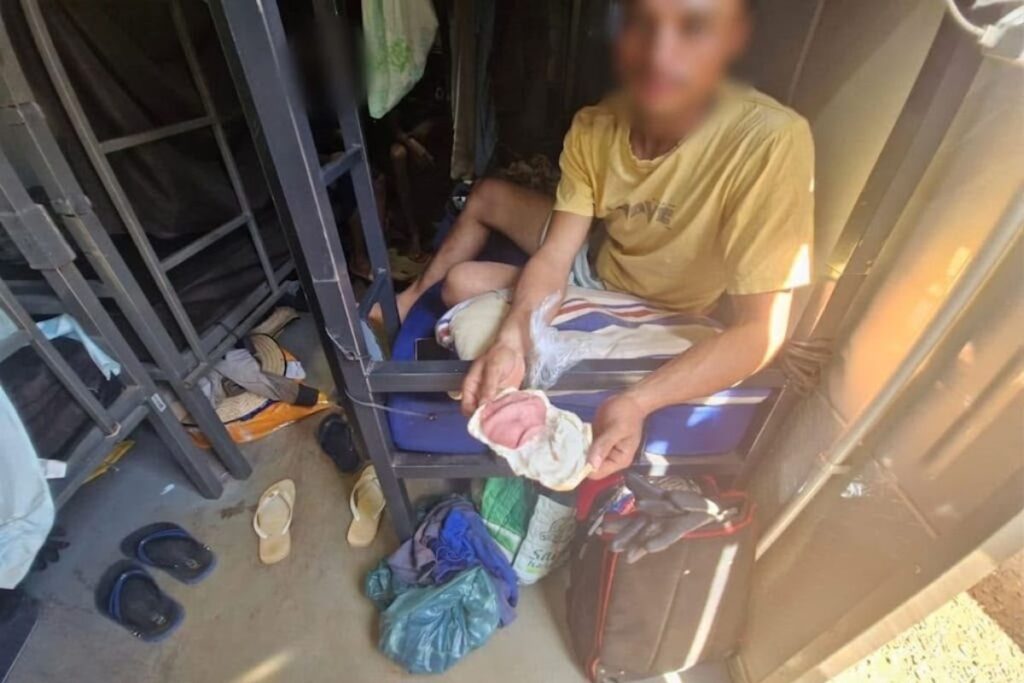
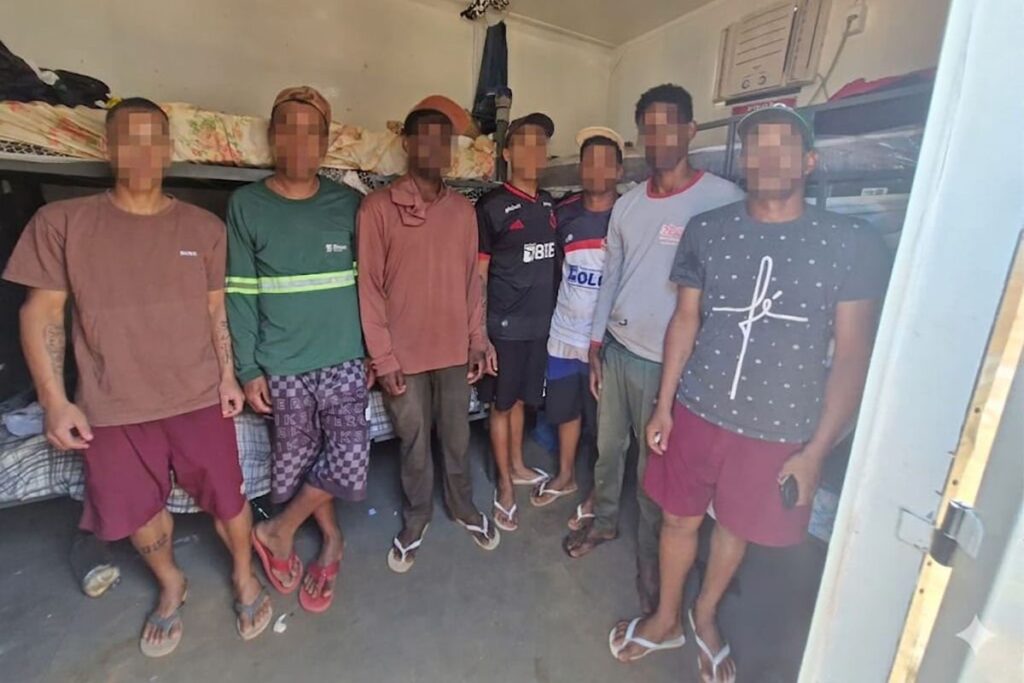
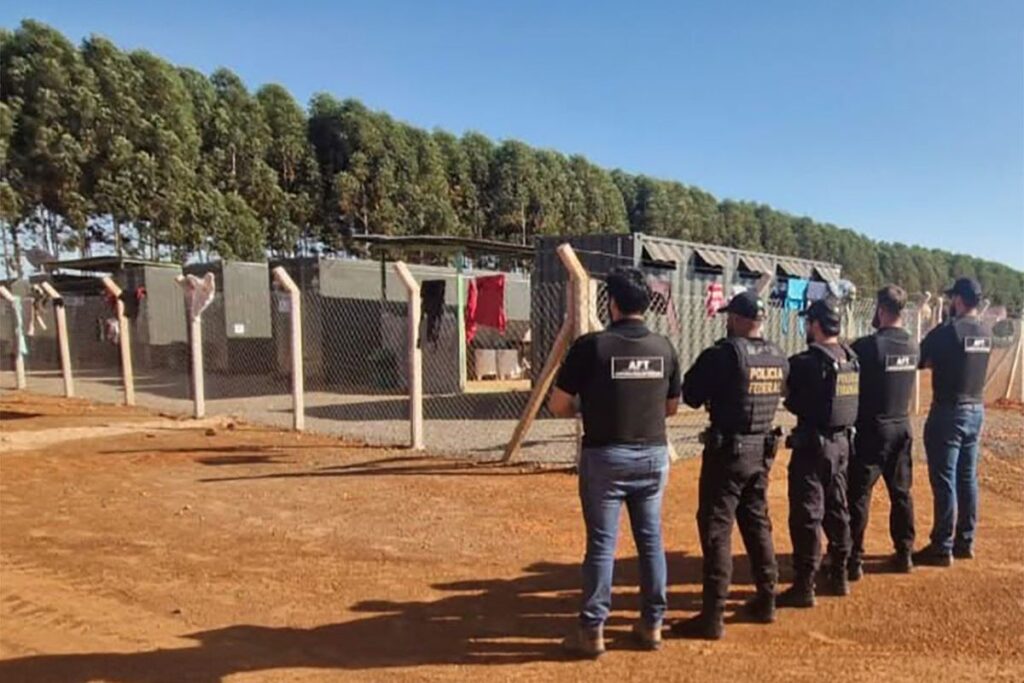
The slave labor case at Fazenda Reata was uncovered on June 8. According to information released by the Minister of Labor and reported by the Brazilian press, the rescued group was manually removing weeds from the farm’s cotton fields.
Inspectors said the workers were housed in overcrowded containers located inside an area enclosed by metal fencing and barbed wire and kept under constant surveillance.
Repórter Brasil contacted Cervi’s legal representatives for comment.
“We are confident that our procedures are compliant and reaffirm our commitment to following the law and the highest standards,” said a statement signed by Grupo Cervi, a company in which Oscar Cervi is a managing partner.
“The relevant information and clarifications will be presented in due course,” the statement added, without addressing the specific questions raised by Repórter Brasil.
In a statement, Bunge said it had requested additional information from Cervi after learning of the “alleged subjection of workers to degrading conditions” at Fazenda Reata.
Bunge, which also responded on behalf of Viterra, emphasized that the property has been certified for more than three years by the Round Table on Responsible Soy (RTRS), one of the leading international certification standards for good social and environmental practices in the soy industry. According to the statement, the farm undergoes regular audits.
The company said it would continue monitoring the case. “Until the investigation has been concluded, Bunge will continue to follow the case with due diligence, reaffirming its commitment to respect for human rights, ethics, integrity and sustainability,” the company said. Read Bunge’s full statement here.
Cotton shipped to some of the world’s largest manufacturers
On its website, Viterra says it exports cotton to “some of the world’s leading textile manufacturers.”
One of them is Pakistan-based Artistic Milliners, described as one of the world’s largest producers of denim, the cotton fabric used to make jeans.
Customs data from January to June 2025 — the most recent period available for analysis by Repórter Brasil — show that the company received Brazilian cotton exported by Viterra in at least 18 shipments.
Artistic Milliners also appears on supplier lists published by Levi Strauss & Co., the owner of Levi’s; US company Gap; and PVH, which owns Calvin Klein and Tommy Hilfiger.
Another major manufacturer in the sector is India-based Maral Overseas, which purchased Brazilian cotton exported by Viterra on at least seven occasions last year. The company supplies Adidas, PVH and luxury brand Lacoste.
Repórter Brasil identified another ten records of Viterra exports to Pakistan-based Nishat Mills between February and June 2025. The manufacturer appears on the supplier lists of Lacoste and Gap.
Levi Strauss & Co., Lacoste, Gap, Adidas and PVH have published social and environmental policies prohibiting forced labor and serious labor violations among their suppliers. The rules also apply to subcontractors within their supply chains.
Repórter Brasil asked all the companies named in this report whether they had received supplies from Viterra in 2026 and whether they could guarantee that cotton produced at Fazenda Reata, where the slave labor case occurred, had not entered their supply chains.
None of the manufacturers supplied by the Bunge-owned multinational responded to the questions sent by email before publication.
Among the fashion brands named in the report, Adidas, Lacoste and Levi Strauss & Co. provided statements.
Adidas said Maral Overseas is a supplier that manufactures clothing for the brand for the Indian market. Following “a comprehensive review of available sourcing and production records,” the company said it could confirm that “no cotton imported from Brazil was used by the supplier.”
The company also said that, “as a precautionary measure,” it would share the information presented by Repórter Brasil with other material suppliers in the region and ask them to review their own cotton supply chains for any potential links to the farm identified in the investigation. “So far, however, we have no indication of any connection,” the brand said.
Lacoste said its traceability system allowed it to confirm that no cotton grown at Fazenda Reata had been used in the brand’s products. The company also said that all its suppliers are required to comply with its Code of Conduct, which prohibits all forms of forced, compulsory or exploitative labor.
Levi Strauss & Co. said it examines all relationships involving suppliers — as well as their subcontractors and subsidiaries — to identify potential links to forced labor cases.
“And while an initial review shows no active connections between the entities mentioned in this query, we are investigating further to ensure our partners are in full compliance with our Supplier Code of Conduct,” the company said.
The complete statements issued by the brands can be read here.
Experts say companies must take responsibility
Just over a month ago, Repórter Brasil revealed that a supplier to brands including Levi’s, Lacoste and Hugo Boss had a history of purchasing cotton from a cooperative headed by a farmer held responsible for slave labor.
Experts say slave labor cases in the cotton supply chain reinforce the need for major brands to expand their monitoring systems and adopt preventive measures.
“There is considerable concern among these companies about the quality of the goods, but very little concern about the dignity of the workers at the beginning of the supply chain,” said Ilan Fonseca, a prosecutor with Brazil’s Labor Prosecutor’s Office (MPT).
Fonseca manages Reação em Cadeia, or Chain Reaction, an MPT project that investigates labor violations in Brazilian supply chains.
According to Fonseca, major brands in the textile industry adopt a “convenient approach” by simply changing suppliers after allegations of violations emerge.
Rafael Pieroni, head of NGO Earthsight’s Latin America team, said companies need to understand their responsibility for their supply chains.
“It should be the fashion company’s responsibility to know what is happening at the production stage. Perhaps they do not know because they have never asked the question or shown any interest in finding out,” he said.
“They need to understand that it is also their responsibility to invest in social and environmental issues.”
Company participates in cotton sustainability program
Viterra states that it is a member of the Better Cotton Initiative (BCI), the world’s largest cotton sustainability program. However, the Bunge-owned company does not appear on the latest membership list published by the BCI in July.
Fazenda Reata itself, where the slave labor case occurred, was licensed under the program during the 2022/2023 and 2023/2024 harvest seasons.
Properties that sell cotton under the BCI label are required to comply with standards covering soil and water management, biodiversity protection and respect for labor rights.
In a statement sent to Repórter Brasil, the BCI confirmed that Fazenda Reata ceased to be licensed under the program in 2024 but did not provide details about why the farm lost its certification.
Viterra, meanwhile, has been a BCI member since 2022. According to the organization, following the merger with Bunge, Viterra’s BCI membership is registered under the name Bunge Netherlands BV.
The BCI said that, when it receives allegations of a potential breach of its Member Code of Practice, the organization seeks clarification from the relevant member before determining appropriate action. “We will therefore share these allegations with Bunge to seek their input before deciding if any further action is necessary,” BCI said. Read the full statement here.
Farm holds responsible-soy certification
Fazenda Reata is part of a group of Bunge suppliers certified by the Round Table on Responsible Soy (RTRS), one of the leading international standards for certifying good social and environmental practices in the soy industry.
The property’s most recent assessment took place in July 2022, according to a report published by the organization responsible for auditing compliance with the RTRS standard. At the time, the monitoring process identified at least 15 breaches of the certification program’s rules.
According to the report, Fazenda Reata’s management had not provided evidence that female workers were guaranteed maternity leave and job security upon their return to work. The farm had also failed to demonstrate the existence of a grievance mechanism for employees and local communities or to provide records documenting the distribution of personal protective equipment.
After the farm’s management provided additional clarification, the property’s certification was renewed for another five years.
Repórter Brasil contacted the RTRS’s Brazilian office via email through the organization’s regional market development office in Mato Grosso, but had not received a response before publication.
Grain supplied to biofuel plant
Information obtained by Repórter Brasil also indicates that soy and cotton from Fazenda Reata were supplied this year to Bunge’s facility in Rondonópolis, Mato Grosso state, one of the company’s largest industrial complexes in Brazil.
In June, Bunge announced its participation in the production of the first sustainable aviation fuel, or SAF, made from Brazilian soy. The project was carried out in partnership with Brazilian oil company Petrobras and Vibra, Brazil’s largest fuel distributor.
According to information released by the company, Bunge would be responsible for sourcing and certifying the soy and for producing the vegetable oil at its Rondonópolis facility.
In response to Repórter Brasil, Vibra said it had asked Bunge for clarification regarding the reported allegations.
Bunge, in turn, reiterated to Vibra that the property is certified under the RTRS standard and said it could guarantee that soy produced on the farm was not part of the supply chain used in the SAF production project.
“Vibra is monitoring the matter and, should any irregularities be confirmed that violate our principles and standards regarding business integrity, respect for human rights and compliance applicable to the contractual relationship, the company’s Compliance and Governance departments will adopt the appropriate measures provided for under its internal rules,” Vibra said in a statement. The full statement is available here.
Petrobras did not respond to the questions sent by Repórter Brasil before publication.
The post Farm linked to slave labor holds sustainability certification and ties to luxury brands appeared first on Repórter Brasil.
