






Global tin producer bought cassiterite from Amazon areas suspected of illegal mining activity

TIN PRODUCER White Solder acquired cassiterite from areas of the Brazilian Amazon where there is no evidence of mining activity. Between 2020 and 2025, the company reported in official documents the purchase of 2,300 metric tons of cassiterita from two locations in Campo Novo de Rondônia, in northern Rondônia state, where no signs of mining were found.
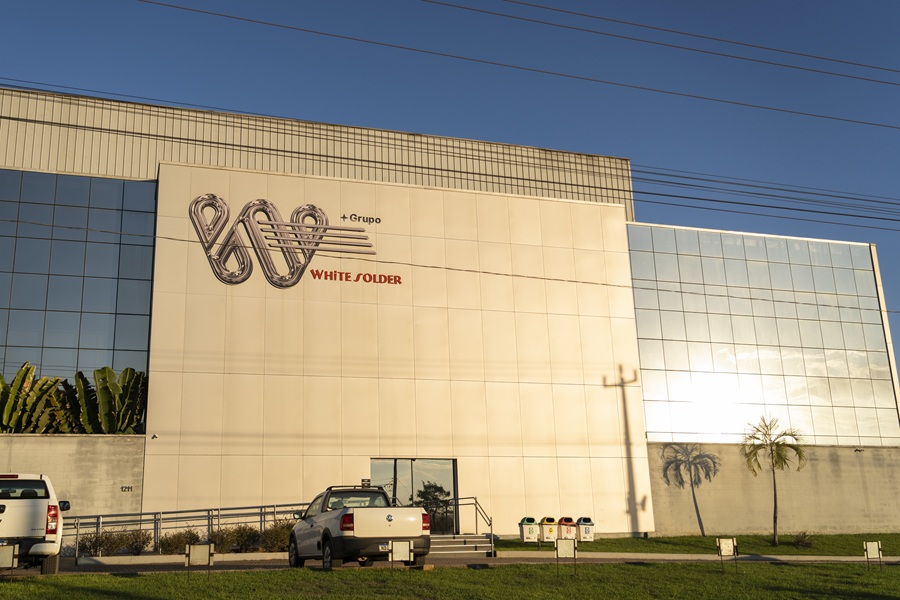
White Solder holds a central position in the global tin market: the group presents itself as one of the world’s largest tin manufacturers and ranks second in royalty payments from cassiterite extraction in the Brazilian Legal Amazon, according to data from the Brazil’s National Mining Agency.
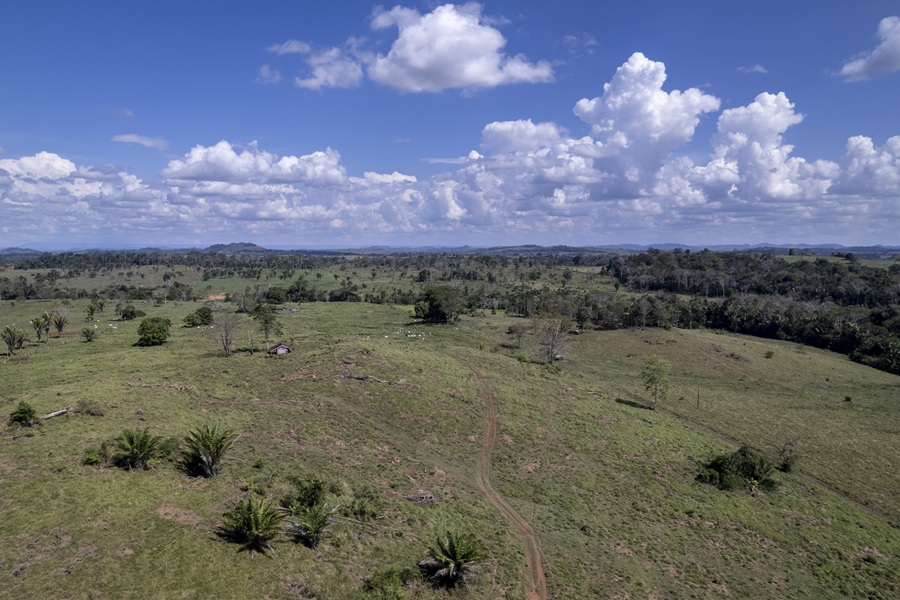
Repórter Brasil visited the two areas identified by the company as the source of the cassiterite but found only cattle pasture and dozens of animals. The verification was conducted through an aerial survey carried out jointly with Greenpeace Brasil and through unpaved roads.
“The available evidence does not show spatial and temporal signs consistent with mineral production,” Greenpeace said. In addition to the field verification, the organization analyzed high-resolution satellite imagery, which was reviewed by Repórter Brasil. According to Greenpeace, the evidence suggests that the areas are “ghost mines.”
“Ghost mines” is the term used to describe mining sites that are authorized to operate and sell minerals but that, in practice, have no recorded production. Such sites can be used to conceal the true origin of minerals illegally extracted from areas without mining authorization, such as Indigenous territories.
Cassiterite is the raw material used to produce tin, a metal considered strategic for the defense and technology industries because it acts as a kind of “glue” in the soldering of electronic components. White Solder purchases raw cassiterite and processes it at an industrial facility in Rondônia before exporting it.
A total of 2,900 tons of cassiterite were reported between January 2020 and June 2026 as having been extracted from the two Artisanal Mining Permits or PLG, in the abbreviation in Portuguese. A PLG is a simplified authorization issued by Brazil’s National Mining Agency, intended for small-scale mining. Of this amount, 2,300 tons were declared by White Solder to CFEM, Brazil’s Financial Compensation for Mineral Exploration. The estimated total value of this production is R$228.54 million (approximately USD 44,3 million).
Contacted by email and phone by Repórter Brasil, White Solder had not responded by the time this report was published.
At the end of August, the mining company became a defendant in Federal Court accused of operating an illegal cassiterite mining scheme in the Yanomami Indigenous Territory, in Roraima state. According to the Federal Public Prosecutor’s Office (MPF), which filed the charges, the arrangement allegedly moved R$166 million (USD 32 million).
“The main source of tin is cassiterite. The Amazon as a whole is rich in cassiterite, but much of this ore is located in environmentally sensitive areas,” warns André Luiz Porreca, the MPF prosecutor responsible for the investigation into White Solder.
Although they do not overlap with any protected areas, the PLGs with no evidence of mining activity are located six kilometers from the Uru Eu Wau Wau Indigenous Territory. Home to nine Indigenous peoples, including five isolated groups, the territory is under pressure from illegal cassiterite mining.
“More and more PLGs are expanding, and mining is reaching the Indigenous territory. People think that because it is outside the territory it does not have an impact, but it does,” says Ivaneide Bandeira, known as Neidinha Suruí, one of the founders of the Kanindé Ethnoenvironmental Defense Association.
A candidate for the Brazilian Senate, Neidinha cites river contamination and increased violence around the Indigenous territory as some of the impacts of mining.
“The Yanomami were nearly driven to extinction by illegal mining. Imagine the effects on a territory like Uru Eu Wau Wau, which has a much smaller population. It will be a genocide,” she says. The Yanomami Indigenous Territory is home to around 31,000 Indigenous people and Uru Eu Wau Wau to 518, according to the Brazilian Institute of Geography and Statistics.
Suppliers with previous environmental infractions
White Solder presents itself as one of the world’s largest tin producers. The company is headquartered in São Paulo and Amazonas states and operates a metallurgical facility in Ariquemes, Rondônia.
The plant is located 100 kilometers from Campo Novo de Rondônia, where the two PLGs with suspected irregularities are located. One of them is registered under Coomibra (Brazilian Miners Cooperative). Greenpeace analyzed satellite images from several years and identified signs of mining activity only in 2018 and 2019. After that period, the organization found no evidence of mining.
Between January 2020 and April 2023, White Solder reported the purchase of 2,300 metric tons of cassiterite from this area, with an estimated value of R$228 million (USD 44 million), according to calculations by Repórter Brasil based on declared CFEM payments.
Most cassiterite sales took place when this PLG belonged to another cooperative, Coopercam (Campo Novo de Rondônia Miners Cooperative). The entity filed the mining application in 2013 and held the permit until March 2023. Two months later, it was ordered by the Court of Rondônia state to cease “all mining activities” in the municipality due to irregular cassiterite extraction in the region.
Contacted by Repórter Brasil, Coopercam and Coomibra did not respond by the time this report was published.
Company says it will suspend purchases after Repórter Brasil inquiry
The second PLG showing signs of being a “ghost mine” is located in an area adjacent to the first one and is operated by Coomari (Ariquemes Mining Cooperative).
A total of 7.9 metric tons of cassiterite was reported by White Solder as originating from this location in December 2024 and April 2025.
In this area, Greenpeace said it “did not find any signs of mining activity” in the historical satellite imagery series. During an aerial survey conducted by Greenpeace and Repórter Brasil in August of this year, no mining scars were identified either.
In addition to White Solder, the company Fábrica Auricchio Indústria e Comércio de Metais, based in Mogi das Cruzes (São Paulo state), also purchased cassiterite from this area. Between June 2024 and June 2026, around 524 metric tons of ore with the alleged origin in this area were reported by the company, with an estimated total value of R$61.9 million (USD 12 million).
Besides its operations in São Paulo state, the company has facilities in Pará state and Chile and specializes in processing copper and cassiterite to produce tin ingots, solder wire, and other products.
After being contacted by Repórter Brasil, Fábrica Auricchio said it would suspend purchases of ore from the area “until the facts are properly clarified.” In a statement, the company emphasized that it “adopts due diligence and traceability procedures for responsible mineral sourcing” and that it carries out verification procedures before beginning purchases from mineral suppliers.
According to Fábrica Auricchio, an in loco inspection was carried out at Coomari’s PLG area between late 2023 and early 2024. “At the time, no elements were identified that would indicate to Fábrica Auricchio any irregularity regarding the origin of the ore or that would allow the conclusion that the situation currently reported by the investigation existed,” the company said. “Given the new information presented, the company will conduct a new specific verification of the mentioned PLG.” The full response can be read here.
Fábrica Auricchio, like White Solder, is certified by the RMI (Responsible Minerals Initiative), a global initiative that brings together companies and organizations to promote responsible mining practices.
Contacted by Repórter Brasil, RMI said it will analyze the available evidence, conduct further inquiries, and consult stakeholders to assess whether it will remove or maintain both companies on its list and whether adjustments to the program are necessary. The full response can be read here.
In June 2024, Coomari was fined more than R$1 million by Ibama (Brazil’s environmental protection agency) for maintaining “potentially polluting activities without a license.” On the same day, an 800-square-meter area in Ariquemes was embargoed.
Contacted by Repórter Brasil, Coomari did not respond by the time this report was published.
How Artisanal Mining Permit’s enable fraud in mineral origin
A PLG (Artisanal Mining Permit) is a special authorization granted by Brazil’s National Mining Agency for the small-scale extraction of minerals such as gold and cassiterite.
Experts consulted by Repórter Brasil say that, in practice, the model has vulnerabilities that may allow illegally sourced material to be declared as legal. There is no requirement for prior mineral exploration studies, and the applicant itself is responsible for declaring the productive potential of the area.
In addition, after approval by Brazil’s National Mining Agency, there is limited oversight by regulatory agencies regarding how much ore is actually extracted from the authorized areas.
According to Danicley Aguiar of Greenpeace Brazil, the lack of prior research into the productive potential of an area functions as a “second presumption of good faith.” He refers to the “presumption of good faith” rule that, until 2025, allowed buyers of artisanal gold to classify the mineral as legally sourced based solely on information provided by miners. This practice was declared unconstitutional by Brazil’s Supreme Federal Court last year.
“There is no geological study to estimate whether one kilogram, one hundred kilograms, or one hundred thousand kilograms of ore could come from that area, because no one knows the deposit’s potential,” says Aguiar. “It is a kind of ‘second presumption of good faith’: we continue to authorize and license production without knowing how much ore actually exists there,” he adds.
At the end of May, Greenpeace Brazil published an assessment estimating that 25.3 metric tons of gold (worth R$18.4 billion) may have originated from PLGs with irregularities.
“There is a clear distortion of the purpose of PLGs,” says André Luiz Porreca, the MPF prosecutor investigating the White Solder case. He criticizes the lack of monitoring by Brazil’s National Mining Agency, which “has a duty to inspect the location where the ore is extracted.” “This is established by law, but it is not being done,” the prosecutor says.
In June, the agency approved a resolution changing the rules governing the current artisanal mining permit system. Among the changes is a requirement to prove actual mining activity as a condition for renewing a PLG. The regulation also limited the maximum area for PLGs held by individuals and sole proprietorships to 50 hectares, and to 1,000 hectares for areas registered by cooperatives, which will be required to annually provide a list of their members.
Repórter Brasil contacted the ANM, but the agency did not respond by the time this report was published.
Cooperative charged with illegal mining also supplied White Solder
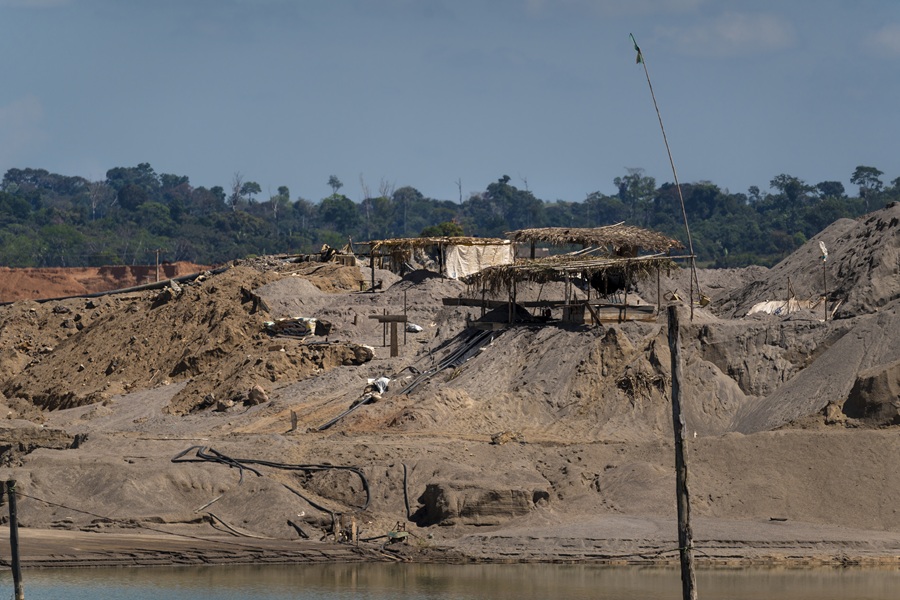
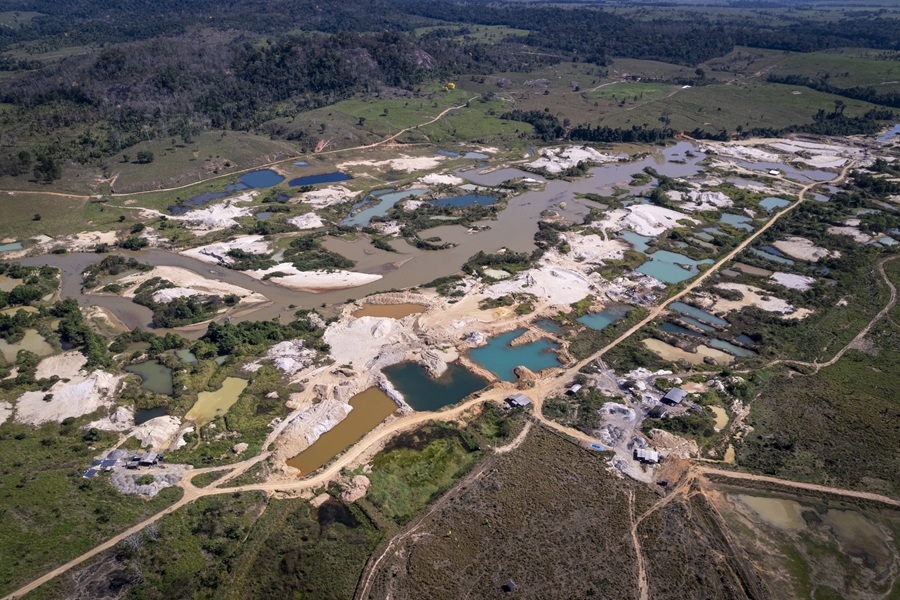
The aerial survey of the region also revealed a mining operation along the Massangana River, in the rural area of Ariquemes. It is a PLG operated by Coopertin (Brazilian Tin Producers Cooperative). The site contains piles of mining waste, dams, and machinery used to extract cassiterite across an area of 5,600 hectares.
However, according to satellite images analyzed by Greenpeace, the mining operation has expanded beyond the limits of the PLG. In June 2024, mining activity extended beyond the northern boundary of the area, following the course of the river, according to the organization’s analysis.
“Comparative visual inspection of the images makes it possible to identify the expansion of the mining front over time and verify its position in relation to the authorized limits of the PLG, allowing us to conclude that extraction has expanded beyond the PLG boundaries,” Greenpeace’s analysis states.
Coopertin is a defendant alongside White Solder in the investigation into an alleged criminal scheme in the Yanomami Indigenous Territory.
Between January 2020 and May 2026, White Solder reported purchases of 20,000 metric tons of cassiterite attributed to the cooperative’s area, with an estimated value of R$1.6 billion.
Coopertin did not respond to Repórter Brasil by the time this report was published.
The post Global tin producer bought cassiterite from Amazon areas suspected of illegal mining activity appeared first on Repórter Brasil.